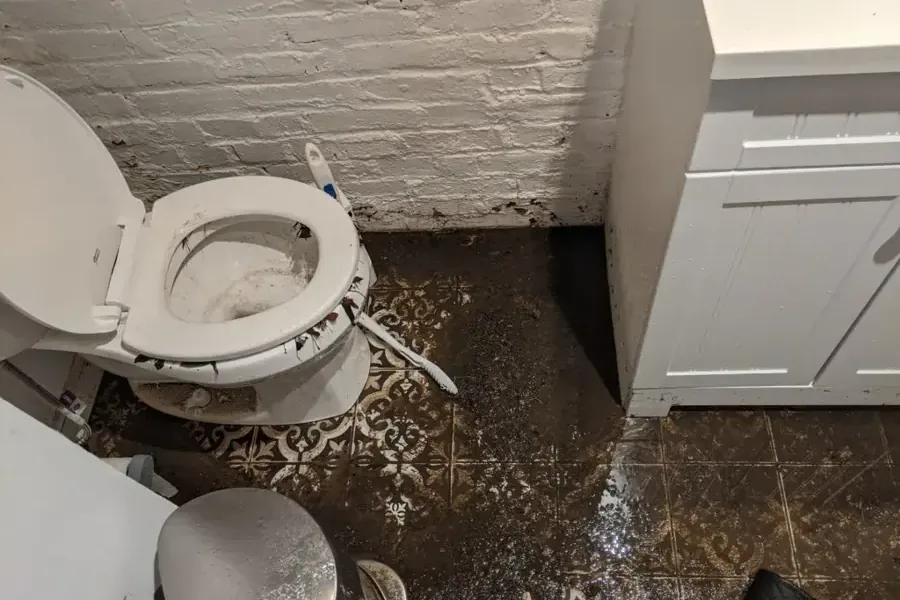
When sewage comes up through a floor drain, a tub or a toilet in Calabasas, the first question is whose pipe is blocked. Las Virgenes Municipal Water District, or LVMWD, and the County Department of Public Works maintain the sewer mains in the area, while LVMWD says the property owner maintains the lateral from the home to the main. This post explains how the two differ, who to call and how the cleanup works.
Key takeaways
- LVMWD and the County Department of Public Works maintain the sewer mains, and the property owner maintains the lateral from the home to the main.
- If sewage is bubbling out of a manhole cover, LVMWD tells residents to call right away.
- LVMWD names tree roots in the lateral and fats, oils and grease as causes of blockages and backups into homes.
- Sewage is Category 3 water, so porous materials that it touched are removed and hard surfaces are cleaned and treated.
- The City of Calabasas Building and Safety FAQ says no construction permit is needed for clearing stoppages in pipes, valves or fixtures.
Mains, laterals and who maintains them
A home connects to the street sewer through a lateral, a pipe that runs from the house to the main. The main is the larger public pipe that collects flow from many homes.
Telling the two apart decides who gets the first call. A plumber or a camera inspection can find where the blockage sits.
- The main is the larger public pipe that collects flow from many homes.
- The lateral is the pipe from the house to the main, and the owner maintains it.
- A cleanout is an access point on the lateral where a plumber can inspect or clear the pipe.
The main
LVMWD and the County Department of Public Works maintain the sewer mains in the area. Wastewater in the area goes to the Tapia Water Reclamation Facility, operated by the Las Virgenes-Triunfo Joint Powers Authority.
The lateral
LVMWD says the property owner maintains the lateral from the home to the main sewer pipe. A blockage in the lateral is therefore the owner's to clear.
Signs of a sewage backup
A blockage in the lateral usually affects one home, while a blockage in the main can show up in several. A plumber with a camera can confirm which one it is.
The signs start small and get worse as flow stops.
While a backup is in progress, stop using water. Do not flush, run the dishwasher or start the washing machine, because every added gallon has to go somewhere.
A backup inside the house is a health risk, so do not wait to see whether it clears by itself.
- Several drains run slowly at the same time, such as a tub, a sink and a toilet.
- A toilet gurgles when another fixture drains.
- Sewage rises in the lowest drain, usually a shower, a tub or a floor drain.
- A sewage smell near a drain or a cleanout.
- Neighbors report the same problem, which can point toward the main.
When sewage bubbles out of a manhole
LVMWD tells residents to call right away if sewage is bubbling out of a manhole cover. That is a main-side problem, and it needs the district's attention.
LVMWD says its service staff are on call 24 hours a day for water and sewer emergencies. A resident who sees a manhole overflowing does not need to wait for office hours.
A manhole overflow is not the same as a backup inside a home, but the two can happen together when the main is full.
- Keep children and pets away from the area around the manhole.
- Do not try to open or clear a manhole cover.
- Photograph the overflow from a safe distance, with the time noted.
What usually blocks a lateral
LVMWD names tree roots in the lateral and fats, oils and grease as causes of blockages and backups into homes. It also asks customers to flush only the four Ps: pee, poop, toilet paper and puke.
Grease is the easiest cause to prevent. Let it cool and put it in the trash instead of pouring it down the sink.
- Roots find small cracks in a lateral and grow into a mass that catches paper.
- Cooking grease cools and coats the inside of the pipe, then narrows it.
- Wipes do not break down, even when the package calls them flushable, and LVMWD asks that they stay out of the toilet.
- Paper towels and hygiene products add to the clog.
How the cleanup works
Sewage is Category 3 water, so the work is more careful than for a clean supply leak. The full process is described under sewage backup cleanup.
Containment and removal
The area is closed off and the crew uses water extraction to remove standing water. Carpet, pad, the bottom of the drywall and other porous materials that the sewage touched are taken out.
Workers wear protective gear because sewage carries bacteria, and the household stays out of the cleanup area until it is finished.
Contents that touched the water, such as rugs, boxes and low furniture, are sorted. Hard items can be cleaned, while soft items that soaked it up are usually discarded.
Cleaning and drying
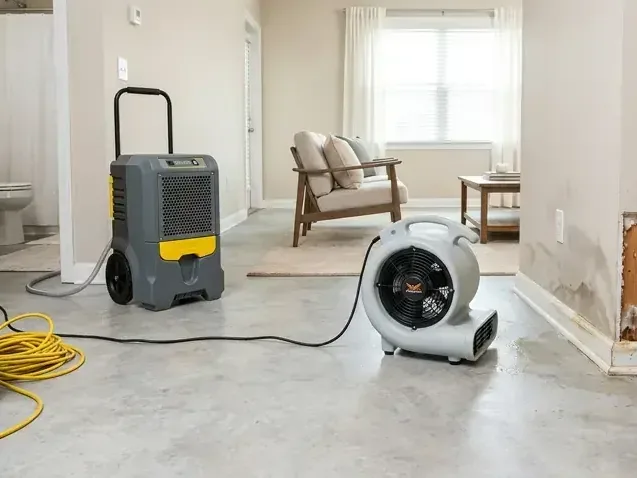
Hard surfaces are cleaned and treated with an approved product. Structural drying follows, with air movers and dehumidifiers running until readings reach the dry range.
Readings are logged each day, and the equipment stays until the structure reaches the dry range. Only then is the area rebuilt.
Permits and repairs
The City of Calabasas Building and Safety FAQ says no construction permit is needed for clearing stoppages in pipes, valves or fixtures. That covers a plumber running a cable through a blocked drain.
Other plumbing work is a different matter, so ask the city before replacing or rerouting a lateral. For the wider picture, the water damage restoration page for the area lists every service.
Keep the plumber's invoice and any camera footage. They show where the blockage was and what was done to clear it.
Questions
Who clears a blocked sewer lateral?
LVMWD says the property owner maintains the lateral from the home to the main, so the owner usually hires a plumber to clear it.
Who maintains the sewer main?
LVMWD and the County Department of Public Works maintain the sewer mains in the area. The district tells residents to call right away when sewage bubbles out of a manhole cover.
Is sewage backup water dangerous?
Yes. It is Category 3 water and can carry harmful bacteria, so children, pets and anyone with health concerns should stay out of the area until it is cleaned. Open windows if the weather allows, and wash hands with soap after contact with anything that touched the water.
Can carpet that touched sewage be saved?
Usually not. Porous materials that sewage soaked are removed, and the surfaces underneath are cleaned and treated before drying.
Where does wastewater from the area end up?
It goes to the Tapia Water Reclamation Facility, which the Las Virgenes-Triunfo Joint Powers Authority operates.
Should the toilet and sinks be used during a backup?
No. Stop using water until the blockage is cleared, because the extra water has nowhere to go and can add to the mess.