Slab Leak Water Damage in Chatsworth, CA
Slab leak water damage restoration in Chatsworth, CA, 24/7. Once a plumber stops the leak, the drying team lifts the wet flooring, dries the slab and the bottom of the walls, and logs readings until the concrete reaches its dry reference.
(888) 578-6508Warm tile or a spinning meter? Phone in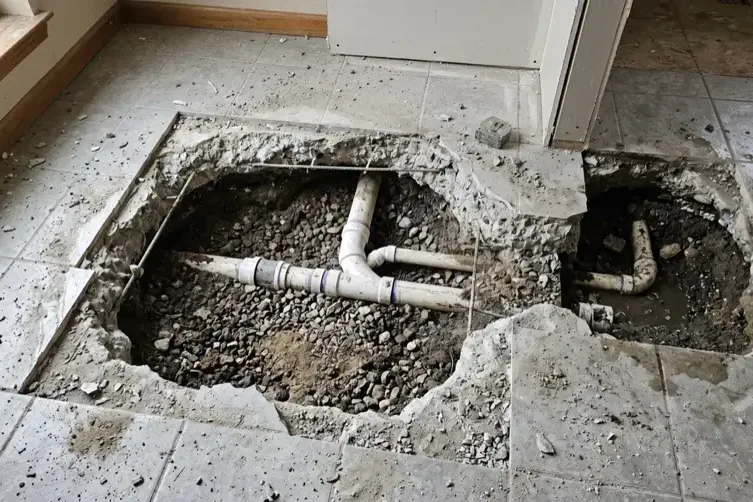
First steps for slab leak water damage in Chatsworth
Check the meter
Read the water meter with every fixture off; a moving dial points to a hidden leak.
Shut the main
Close the main valve to stop water feeding under the slab.
Mark warm spots
Tape off warm or damp spots on the floor for the plumber and the walkthrough tech.
Save the bills
Keep recent water bills, because a sudden jump helps date the leak for the claim.
How slab leak water damage gets handled
Map the wet floor
Thermal imaging and meters outline the wet area around the leak point.
Lift what reads wet
Tile, laminate, pad and baseboard come up only where the readings say wet.
Dry the slab and walls
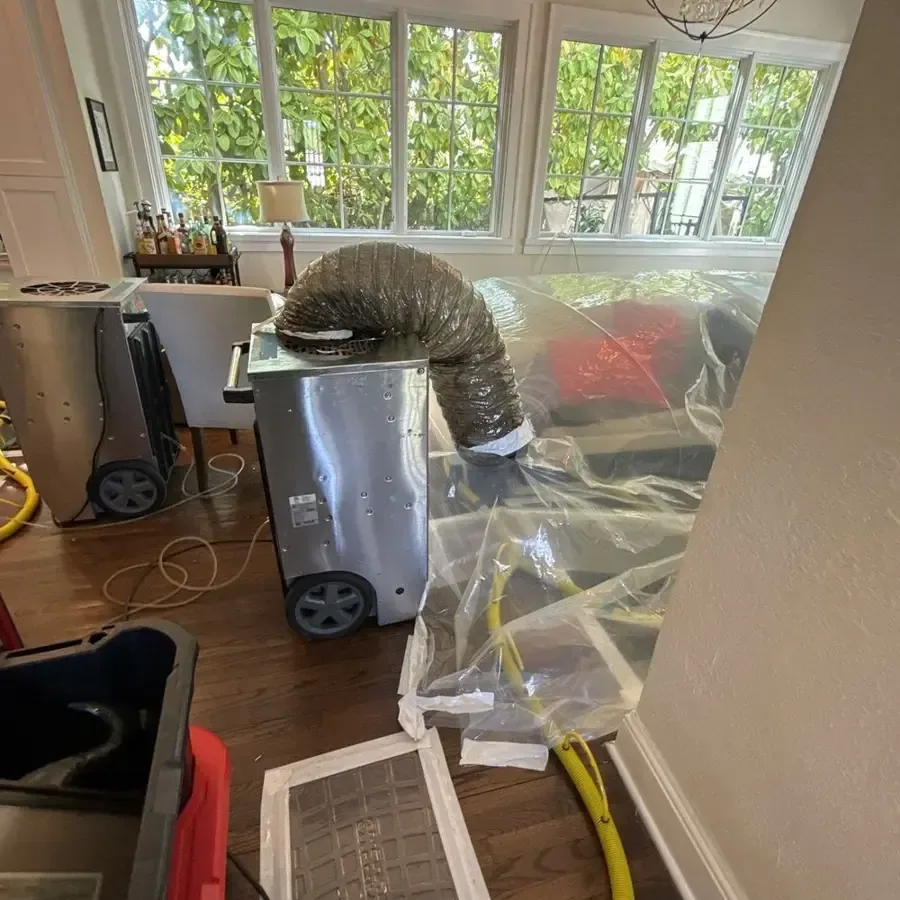
Dehumidifiers and air movers run over the slab, with the bottom of walls opened if needed.
Verify and hand off
Readings match the dry reference before flooring repairs start.
What does slab leak water damage cost in Chatsworth, CA?
Slab leak water damage in Chatsworth, CA typically runs $2,000 to $9,000 for the drying and removal, separate from the plumbing repair. The wet area, the flooring type and how long the leak ran set the number.
Ranges are typical, not a quote: the water category, the square footage, the material class and how fast drying started move the number most. Run the water damage cost calculator for a closer planning range.
Map, extract, dry, verify
- 1
Map
Pinless meters and a thermal camera show where the water went before anything is moved.
- 2
Extract
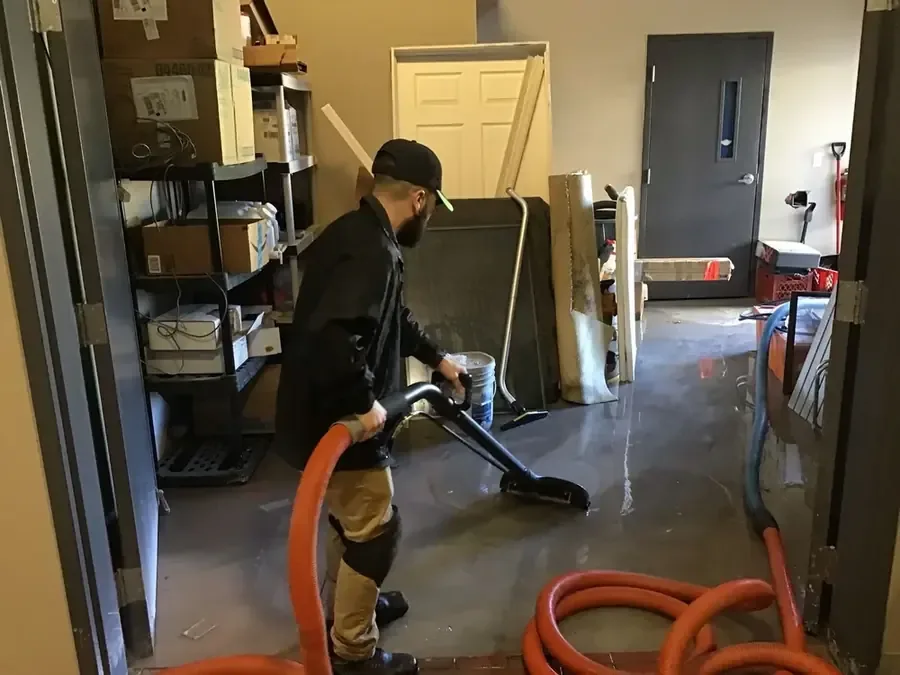
Truck-mounted units pull the free water first, because extraction removes far more than evaporation.
- 3
Dry
Air movers and LGR dehumidifiers run at the load each room needs, logged once a day.
- 4
Verify
The drying phase ends when materials read within 2 to 4 points of a dry reference.
Signs of a slab leak in a ranch home
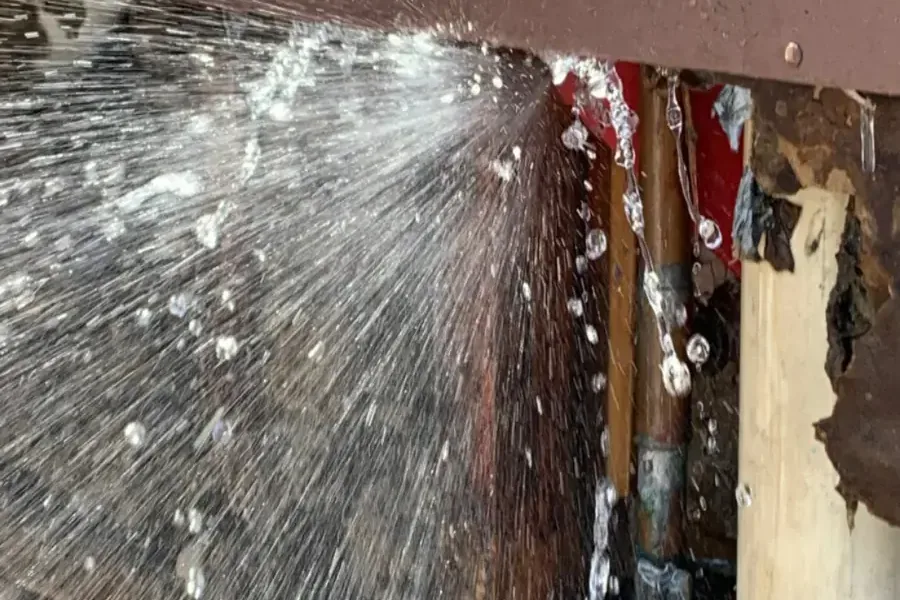
Most homes here were poured on concrete slabs between the 1950s and the 1970s, with copper supply lines running underneath. Decades of pressure and moderately hard water wear pinholes in that copper, and the water travels under the floor before anyone sees it.
- A warm spot on tile over a hot water line
- Carpet edges or baseboards damp with no visible source
- The water meter dial moving with every fixture off
- A water bill that climbs with no change in use
- A musty smell along the bottom of a wall
Who does what on a slab leak
A plumber finds and stops the leak, often by rerouting the line through the attic or walls instead of breaking the slab. The restoration team handles the water already in the house: it maps how far the moisture spread, lifts the flooring that reads wet and dries the slab.
The 1994 Northridge earthquake cracked slabs across the northwest Valley, so the walkthrough also notes old cracks where water can wick up from below.
Drying concrete takes patience
Concrete holds water deep in the slab and gives it up slowly. The drying team runs LGR or desiccant dehumidifiers and air movers over the opened floor, sometimes with drying mats, and keeps the equipment going until readings match a dry slab elsewhere in the home. The drying time estimator shows typical ranges.
Background from public agencies: EPA Fix a Leak Week and California Department of Insurance.
Equipment stays until the readings say dry. The drying time estimator gives a planning range for the rooms involved.
Slab leak water damage across Chatsworth and nearby
The local restoration pros cover ZIP 91311 and 91313, from the Stoney Point and Santa Susana Pass foothills and the horsekeeping streets to the Devonshire Street core, the Lassen and Plummer tracts, the Nordhoff business parks and the hillside homes along Valley Circle Boulevard.
Nearby coverage reaches Porter Ranch, Northridge, West Hills, Canoga Park, Winnetka, Chatsworth Lake Manor, Box Canyon, Calabasas.
Related water damage services in Chatsworth
Slab Leak Water Damage: questions and answers
How is a slab leak found?
A plumber pinpoints it with pressure tests and acoustic or thermal tools. The restoration team then maps how far the water spread under the floor, which is usually wider than the leak point.
Does the slab have to be broken open?
Not always. Many plumbers reroute the line overhead instead. The drying team lifts flooring that reads wet, but drying the concrete rarely means breaking it.
How long does a wet slab take to dry?
Often one to two weeks, longer than drywall or carpet, because concrete gives up water slowly. Equipment stays until readings match a dry reference.
Is slab leak damage covered by insurance?
Many policies treat the resulting water damage differently from the pipe repair, and slow leaks can raise questions. Check your own policy and ask your insurer; the cost calculator helps with planning.
Why do older ranch homes here get slab leaks?
Copper laid under slabs from the 1950s to the 1970s has carried pressurized, moderately hard water for decades, and pinholes form where the pipe wears or rubs against concrete.
Can the dry-out start before the plumbing repair?
Extraction and moisture mapping can start right away with the main shut off. Full drying runs once the leak is stopped, so water is not added back under the floor. Dispatch runs 24/7.
Slab leak soaking the floor? Start the drying now.
Water under tile and carpet wicks into walls and cabinets day after day. The drying team works around the clock.