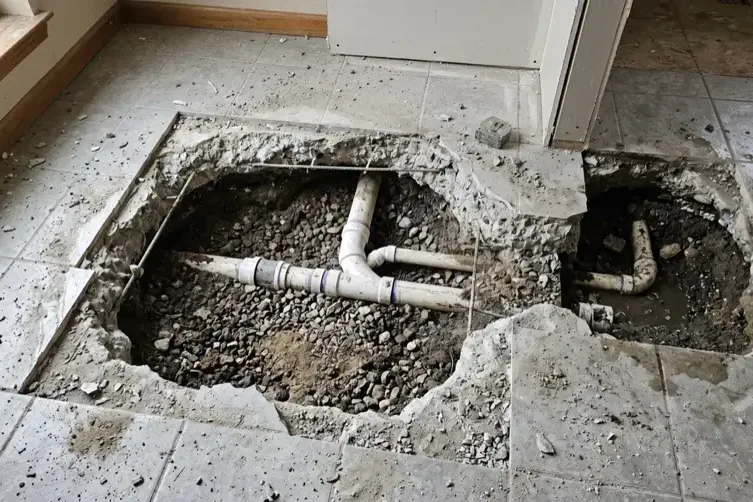
Many homes in Chatsworth are single-story ranch houses built on concrete slabs, so the copper supply pipes run under the floor instead of through a crawl space. A pinhole in one of those pipes can leak for weeks before anything shows on the surface. This post lists the warning signs of a slab leak and explains what drying involves once the pipe is repaired.
Key takeaways
- A floor that feels warm underfoot with no heating below it can mean a hot water pipe is leaking under the slab.
- Damp carpet edges, a musty smell along one wall or swelling baseboards point to water wicking out from the slab.
- The sound of running water, or a meter that keeps moving with every fixture closed, is a strong clue.
- Shut off the main valve when the floor is wet, then photograph the damage before anything is moved.
- The plumber finds and repairs the pipe, and the restoration team then extracts the water and dries the slab, the flooring and the walls.
Why slab leaks stay hidden in Chatsworth homes
A slab home has no basement and no crawl space where the pipes can be seen. The supply pipes sit under or inside the concrete, and the flooring covers everything else.
Los Angeles water is moderately hard, and over many years that wears on copper from the inside. A pinhole is a leak about the size of a needle prick, yet under constant pressure it pushes a steady flow.
Where the water goes
Water under a slab takes the easiest path. It follows hairline cracks, joints in the concrete and the edge where the slab meets the wall.
From there it wicks into carpet, pad, tack strips and the bottom of the drywall. A stain on the surface often means a much larger wet area underneath.
Why it can take weeks to notice
The leak is slow, and the slab and the ground beneath it soak up the first part of the water. Nothing drips, so the first signs are small and easy to explain away.
By the time a bill jumps or a floor warms up, the damage has usually spread past the spot where the signs first show.
Warning signs on floors, walls and the meter
Slab leaks give off a handful of repeat signs. Any one of them is worth a closer look, and two together deserve a plumber visit.
The plumbing itself gives clues too. The sound of running water with every tap, toilet and appliance off is a classic sign, and so is a water meter that keeps moving when everything is closed.
- A warm spot on tile, wood or laminate when the heating is off, which suggests a hot water pipe is leaking below.
- Carpet that stays damp along the baseboards or near a door threshold, even in dry weather.
- Grout that darkens, tiles that lift or crack, and laminate planks that swell at the seams.
- A musty smell that is strongest in one room or along one wall.
- Paint that bubbles or peels near the bottom of a wall, with baseboards that stain or pull away.
- A water bill that rises with no change in how the house is used.
What to do right away
Water under a floor keeps spreading until the supply is shut. The first moves are simple and safe for a homeowner to make.
- Close the main shutoff valve at the house when the floor is wet or a leak is suspected.
- Stay out of rooms with wet floors near outlets, power strips and appliances, and switch off the breaker for any room where water reaches an outlet.
- Photograph the damp areas, the stains and the meter reading before anything is moved.
- Lift small rugs, bags and boxes off wet floors, and open a window if the weather allows.
- Call a plumber to locate the leak, and call a restoration crew to start extraction.
How the plumber and the restoration team split the work
The plumber finds the leak with pressure tests and listening gear, then repairs or reroutes the pipe. That work fixes the cause but does not dry anything.
The restoration team handles the water that has already escaped. Water extraction removes standing water and soaked pad, and slab leak water damage work covers lifting flooring and drying the slab.
While the plumber works
Extraction and the removal of soaked pad and baseboards can start first, since wet materials keep absorbing the longer they sit.
This also gives the plumber a clear view of the damp areas that mark the path of the leak.
After the pipe is fixed
Drying equipment goes in and runs until the readings match a dry reference. New flooring laid over a damp slab fails early, so this step is not skipped.
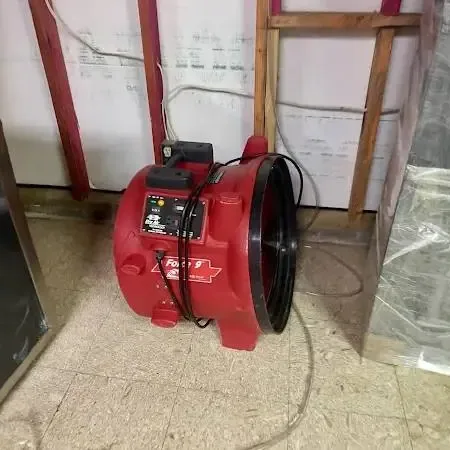
How a slab floor dries
Concrete holds water and gives it up slowly, so drying a slab takes days rather than an afternoon. The drying team sets low-grain dehumidifiers and air movers, then takes moisture readings on the slab, the framing and the drywall every day.
The goal is a reading within 2 to 4 points of a dry reference, following the IICRC S500 standard. The full method is laid out under structural drying.
- Tile over a soaked slab may be lifted in sections so the moisture can escape.
- Wood and laminate over concrete are removed or loosened, because moisture stays trapped between the planks and the slab.
- Baseboards come off and small openings are made so air can reach the bottom of the wall cavity.
When a hunch is worth acting on
Waiting for a stain to prove a leak is the costly path. A leak that ran for weeks soaks more material than one found early, and that shows up in the size of the cleanup.
Rough planning ranges sit in the water damage cost calculator, which works from wet square footage and the type of floor.
Questions
How can a homeowner tell a hot water slab leak from a cold one?
Hot leaks often leave a warm patch on the floor and can make the water heater run more. Cold leaks show up as damp spots and a moving meter without the warmth, and a plumber confirms which pipe is leaking.
Does a slab leak always mean a hole in the floor?
No. Plumbers often locate the leak with listening gear and pressure tests, and the repair can be a small opening or a reroute of the pipe through the walls or the attic. The flooring in the wet area is usually removed for drying either way.
Can a slab leak damage the walls?
Yes. Water wicks up from the slab into baseboards and the bottom of the drywall, and a long leak can reach the insulation inside the wall cavity.
Does the plumber or the restoration team come first?
Both matter. The plumber stops the leak at the source, and the restoration team removes the water that has already spread. The two jobs often overlap at the start.
How long does a slab take to dry in Chatsworth?
Drying runs for days and is measured with daily readings, not a fixed clock. The larger the wet area and the longer the leak ran, the longer the equipment stays.