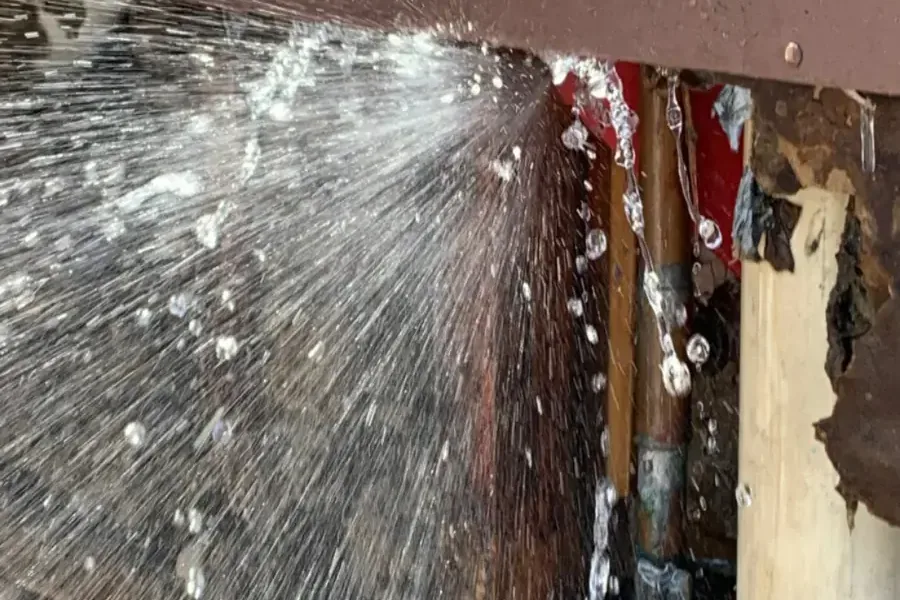
Chatsworth has larger-lot horsekeeping properties where water must travel a long way, from the house to a barn, a tack room, hose bibs and troughs. A leak in one of those long buried pipes can run for weeks under a patio, a driveway or a slab before anything gives it away. This post covers the signs, the shutoff steps and how the house and the outbuildings are dried.
Key takeaways
- Long buried pipes on a horse property have more joints and valves that can fail, and a leak may surface far from the break.
- A soft spot in the yard, a patch that stays green, a wet wall or a meter that moves with the taps closed can all point to a buried leak.
- Shut the supply to the barn or trough run first, and close the main valve to the property if the leak continues.
- Water can follow a pipe trench under a patio or a house slab, so interior flooring may be affected even when the break is outside.
- Outbuilding floors, stored feed and tack are dried or sorted separately from the house.
Why long pipe runs fail on a horse property
More pipe means more joints, valves and fittings, and each one is a place where water can escape. On a horse property the pipe also runs under driveways, patios and along fences where nobody looks at it.
Pipes that serve a barn are used daily, and the stop and start of that use wears on fittings.
Soil movement, tree roots and past digging can also shift a pipe or crack a fitting. A property that has had fencing, a new arena or a barn addition may have a pipe that was nicked years ago.
Hose bibs and troughs
Hose bibs and trough fill valves take a lot of use and a lot of knocks. A cracked fitting or a stuck float can leak for days without anyone noticing, because the water simply runs into the ground.
Barn and tack room runs
A pipe that feeds a tack room or a wash rack often runs under a slab or a concrete apron. A pinhole there pushes water up through cracks, or sideways toward the walls.
Signs of a hidden leak
Because the pipe is buried, the clues show up on the surface or in the building. A slow leak rewards close attention to small changes.
Any one sign can have another cause, but two together justify a closer look. The meter test is the quickest way to tell: close everything and watch whether the dial still turns.
- A soft or muddy spot in the yard or paddock when it has not rained.
- A patch of grass that stays green and lush while the rest has dried out.
- A water meter that keeps moving when every tap, hose and trough is closed.
- Low pressure at the far end of the run, such as a barn spigot.
- A damp wall, a stained slab edge or a musty smell in the barn, the tack room or the house.
- A water bill that rises with no change in use.
Shutting off the right valve
A long run usually has a branch valve where it leaves the main supply. Knowing where it sits turns a long emergency into a short one.
If the branch valve is stuck or cannot be found, the main valve for the property stops the water.
- Close the branch valve to the barn, trough or wash rack first and check the meter.
- If the meter still moves, close the main valve to the property.
- Take a photograph of the meter, the valves and any wet ground before anything is moved.
- Keep animals and people away from soft ground near the break, since it can give way.
How the water reaches the house or a slab
A pipe trench is easier for water to move through than undisturbed ground. Water from a break can follow the trench toward a patio, a garage or the house itself and then soak into the slab edge.
Once it reaches a slab, it behaves like any other slab leak: it wicks into carpet, baseboards and the bottom of the drywall. The burst and pinhole pipe leaks service page covers the pipe side of the problem.
- Check garage floors and patio doors that sit near the pipe route.
- Look for damp baseboards in rooms closest to the barn side of the house.
- Watch for slab cracks that darken after a day of water use.
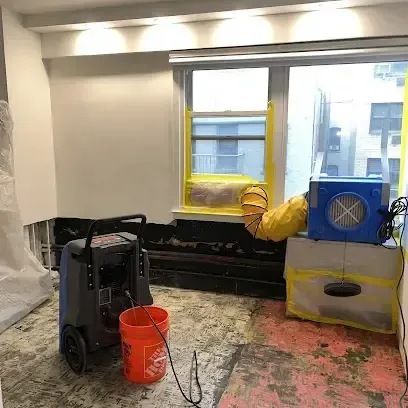
Drying the house and the outbuildings
The plan differs by building. A house gets a standard extraction and drying plan, while a barn or tack room needs choices about stock, bedding and tack.
The house
Water extraction removes standing water, then wet carpet and pad are lifted and the drying team sets air movers and dehumidifiers. Structural drying continues until readings on the slab and the walls reach the dry range.
Barns and tack rooms
Wet bedding and feed are removed, because they soak up water and turn quickly. Leather tack, blankets and saddle pads are lifted off the floor and dried separately.
Wood floors, rubber mats and wall bases are dried in place or pulled, depending on how long they stayed wet.
Outbuildings often have open sides and dirt floors, so the plan focuses on the parts that hold water: the slab, the wall base and anything stored on the floor.
Who does what
A buried leak takes more than one trade. Each has a clear part.
Keeping the sequence straight avoids two common mistakes: drying a building while the pipe is still leaking, and repairing the pipe while the building stays wet.
- A leak detection technician or plumber finds the break and repairs the pipe.
- The restoration team removes the water that reached the buildings and dries them to readings.
- The owner documents the loss with photographs, meter readings and dated notes.
Questions
How can a buried pipe leak be found without digging up the yard?
Plumbers use listening gear, pressure tests and sometimes tracer gas to narrow the spot before any digging. That keeps the trench short.
Can a buried leak damage a house that sits some distance from the break?
Yes. Water can follow a pipe trench or a slab crack, so the house can get wet even when the break is outside or at the barn.
What happens to feed and bedding that got wet?
Wet feed and bedding are usually removed, because they hold water and spoil. Dry feed is moved to a dry area before drying starts.
Does a leak at a trough or hose bib need a restoration crew?
Only when the water reached a building or a slab. A leak that stays in the yard is a plumbing repair, but water that enters a structure needs extraction and drying.
How long does drying a tack room or barn take in Chatsworth?
It depends on the floor, the walls and how long the area stayed wet. Daily readings show when the equipment can leave.
Is a buried leak covered by the same drying plan as a burst pipe inside a wall?
The drying method is the same: extraction, removal of materials that cannot be saved, then air movers and dehumidifiers. The difference is the route the water took and how far it spread before it was found.