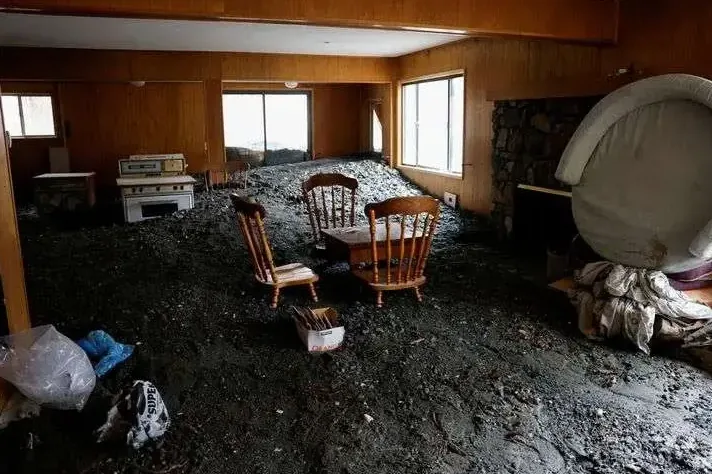
Most of the rain in Chatsworth falls between December and March, in a few Pacific storms that can drop a lot of water at once. The Santa Susana Mountains lie to the north and hills to the west shed that runoff onto the valley floor, where it can reach garage doors, patio thresholds and slab edges. This post explains what to do when storm water gets in and how the cleanup is handled.
Key takeaways
- Storm runoff picks up soil, oil and debris on its way down, so it is treated as contaminated water and not as clean rain.
- Stay out of standing water near outlets, and switch off power to wet areas at the breaker when it is safe to reach.
- Move people, pets and valuables first, then photograph the high-water mark and the damaged items.
- Garage floors, stored boxes and the bottom of interior walls take the first hit and need fast removal and drying.
- Mud left to dry on a slab hides moisture, so the cleanup removes it and dries the structure to readings.
Why hillside runoff reaches Chatsworth homes
A short rain season means a lot of water falls in a few days. The ground and the concrete channels on the valley floor often shed it faster than it can soak in.
Homes below the hills sit in the path of that flow, and the lowest openings take the first water.
Water does not need to be deep to cause trouble. A thin sheet moving across a driveway can push through a gap under a door and cover a garage floor quickly.
Garage doors and thresholds
Garage doors seal poorly against moving water. It flows under the door and spreads across the slab, then carries mud toward any door that leads inside.
Openers, tracks and floor seams along the door edge are the weak points, and they are the first places to check after a storm.
Patios and sliding doors
A patio that sits level with the yard lets water cross the track of a sliding door and reach carpet or flooring just inside.
Water can also push against the base of an exterior wall and seep into the stucco and the bottom of the drywall.
Why storm water is treated as contaminated
Water that crosses yards and streets carries soil, fertilizer, pet waste and oil. The IICRC S500 standard places floodwater from outside in Category 3, and that changes how materials are handled.
Even when the water looks like plain rain, it has crossed roofs, gutters and driveways first. The crew treats it as contaminated until the readings and the source say otherwise.
- Porous items such as carpet, pad and drywall that stayed wet are usually removed.
- Hard surfaces such as concrete are cleaned and treated, not only dried.
- Cardboard, rugs and fabric stored on a garage floor wick water up fast and are sorted out early.
The first steps when water gets in
Safety comes before cleanup. A few simple steps protect the household and the house.
If water is still coming in, a sandbag or a rolled towel at the door buys a little time. Personal safety comes first, and nobody should wade through moving water.
- Stay out of standing water near outlets, cords and the garage door opener.
- Switch off power to the wet area at the breaker, but only if the panel can be reached dry.
- Move people, pets and valuables to dry rooms.
- Photograph the high-water mark and each damaged item before anything is moved.
- Do not use a household vacuum on standing water.
- Keep children and pets out of the area until it has been cleaned.
How the cleanup works
The work follows a fixed order: remove the water, remove the mud, clean what stays and dry the structure. A full description sits under storm runoff and flash flood cleanup.
Extraction and removal
Pumps and truck-mounted units pull the standing water off the slab. Water extraction comes first, because every minute of standing water lets materials soak up more.
Cleaning the slab and the walls
Mud left to dry sticks to concrete and hides the moisture beneath it. Crews shovel and wash it away, then treat the surface with a cleaner made for contaminated water.
Wall bottoms get the same treatment, and baseboards come off so the cavity behind them can be checked.
Contents and the garage
Stored items are sorted into those that can be cleaned, those that can be dried and those that go. Shelving and tools are wiped down, and anything that soaked up water is photographed before it is thrown out.
Drying what the water reached
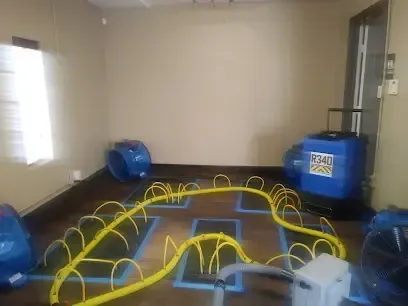
Once the mud is out, the drying team sets air movers and dehumidifiers and takes moisture readings on the slab, the framing and the drywall. Readings are logged each day, and the equipment stays until the structure is dry.
The method is the same one described under structural drying.
Typical drying days by material are laid out in the drying time estimator, though a storm loss often runs longer than a clean water leak.
Wall cavities are checked with a moisture meter and a thermal camera, since water can climb the drywall above the visible mark.
- Carpet and pad that took in outside water are removed and replaced, not saved.
- Drywall that wicked water above the base is cut back to a clean, dry edge of material.
- Wood framing is dried in place and checked with a meter.
Documenting the loss
A good record helps with any claim and with planning the repairs. The restoration team keeps the drying logs, and the household adds its own photographs and notes.
Storm losses often involve more than one room and more than one trade, so a clear paper trail saves back and forth later. The record also shows the sequence of the work, from extraction through final readings.
- Date-stamped photographs of the water, the mud and each damaged room.
- A list of ruined contents with rough ages and values.
- Receipts for any emergency purchases made during the event.
- A note of the date and time rain started and when water entered, kept in a phone or on paper.
Questions
Is storm water that enters a garage really contaminated?
Yes, it is treated that way. Water that crosses yards, driveways and streets picks up soil, oil and waste, and the S500 standard places outside floodwater in Category 3.
Can a garage slab be dried, or does it need to come out?
A concrete slab is cleaned, treated and dried in place. It is the stored contents and any porous material against the walls that are removed.
Does Chatsworth get enough rain for this to be a real risk?
Rain is packed into a short season, from December to March, and a few strong Pacific storms can deliver a large share at once. Hillside runoff then reaches low spots fast.
What should be moved first from a wet garage?
Move anything that wicks water, such as cardboard boxes, rugs, paper and fabric, and anything electrical that can be reached safely. Heavy shelving can wait for the crew.
Should wet carpet near a patio door be kept?
If outside water soaked it, the carpet and pad are usually removed. The crew decides after taking readings and checking where the water came from.