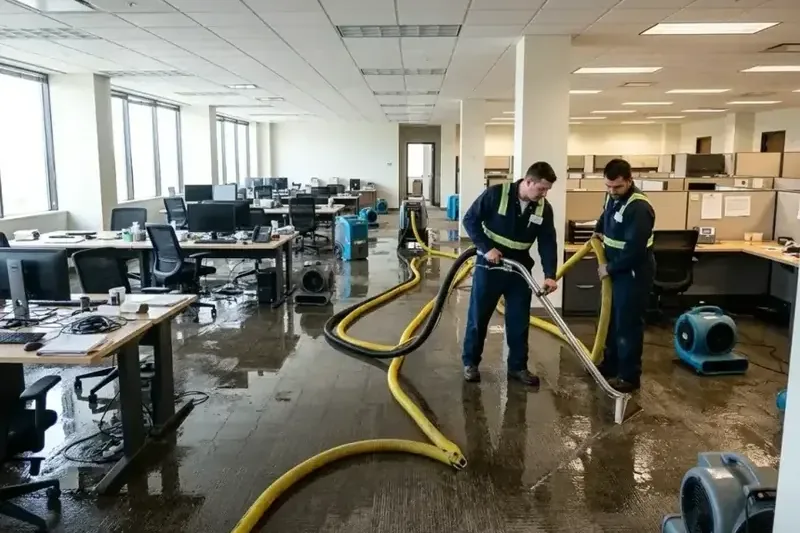
Chatsworth has business parks and light-industrial buildings where a single failed pipe or roof drain can reach several suites at once. A tenant or property manager has two jobs at the same moment: stop the loss and keep the business running. This post explains how a commercial water loss is handled in phases so operations can continue.
Key takeaways
- Shut off the supply to the failed fixture or riser, and tell the property manager at once, since a shared pipe can affect neighbors.
- Protect records, computers and inventory first by lifting stock off wet floors and covering what cannot be moved.
- Commercial drying is planned in phases and zones, so the front counter, the stock room or the server area can stay in use.
- Document the loss with photographs, dated notes and the drying logs, because the lease, the landlord and the insurer may all ask.
- Who pays depends on the lease and the source of the water, and the restoration team documents the cause and the extent.
How water reaches a suite in a business park
Commercial buildings share pipes, roofs and drains, so a loss in one suite is rarely contained to it. Knowing the usual sources helps a tenant tell what to shut off and who to notify.
A business park suite often shares a roof, a slab and a set of risers with its neighbors. A tenant can only see their own damage, but the source may sit in another unit or on the roof.
Supply risers and restrooms
A supply riser feeds restrooms, break rooms and sinks on several floors or units. A split fitting or a failed valve can send water down walls and into the ceilings of the suites below.
Water can travel inside a wall for some distance before it shows on a ceiling, so a stain is often a sign that the cavity above is already wet.
Roof drains and flat roofs
Many business park buildings have flat or low-slope roofs. When a drain clogs in a winter storm, water ponds until it finds a seam and comes through ceiling tile and light fixtures.
A sagging tile or a drip at a light fixture is the early warning, and it is a reason to clear the area underneath.
Shared drains
A blocked drain in a shared restroom group can back up through floor drains and into the suite. That water is sewage and is handled differently from a clean supply leak.
The first steps for a tenant
The first moves are about safety and containment, and they are the same whether the suite is an office, a clinic or a shop.
A short written note of what was done and when, kept with the photographs, helps later with the landlord and any claim.
- Shut off the supply to the failed fixture, or close the suite valve if one exists.
- Tell the property manager right away, since a shared pipe or roof may need attention elsewhere.
- Switch off power to wet areas at the breaker when it is safe to reach.
- Keep staff and customers away from sagging ceiling tile and wet floors.
- Photograph the source, the wet areas and the damaged contents before anything is moved.
- Close the suite to customers if the floor is slick or the ceiling is wet.
Phased drying so the doors stay open
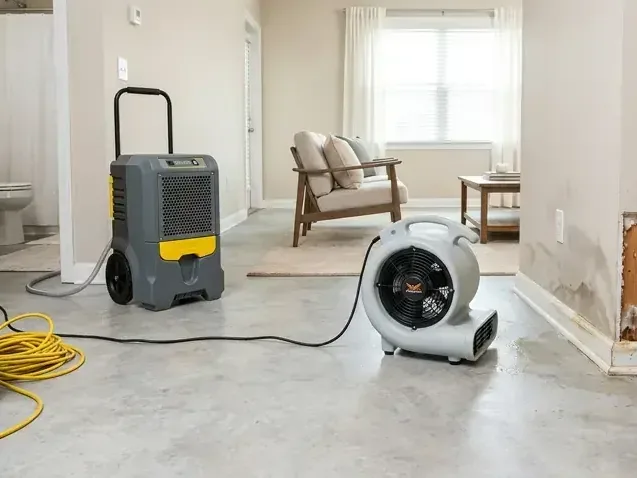
A commercial job is planned by zone. The drying team separates the wet area from the working area with barriers and sets equipment only where the readings call for it.
Noisy work can be scheduled after hours, and the dry zones stay in use. The service page for commercial water damage describes how that phasing works.
Equipment is placed so aisles and exits stay clear, and cords are routed away from foot traffic. Staff are told which areas are off limits and for how long.
The aim is a working schedule that both the tenant and the property manager can plan around. A clear daily plan avoids surprises when the crew returns to read the meters.
- Zones are set by moisture readings, not by the size of the room.
- Barriers keep dust and equipment noise away from the part of the suite that is open.
- Daily readings show when each zone is dry and the equipment can move on.
Protecting records, equipment and stock
A wet floor ruins paper and cardboard fast. Lifting these items first costs little and saves a lot, and it keeps the water extraction crew from working around loose stock.
Computers and servers need power off and a dry spot, and the restoration crew can move or cover heavy equipment.
Specialty items such as medical supplies, samples or electronics may need special handling or a separate dry space.
- Move paper files, boxes and packaging onto tables or shelves above the water.
- Cover equipment that cannot be moved with plastic, and keep it off wet floors.
- Lift pallets of stock onto blocks so the bottom layer does not wick water.
- List damaged items with a photograph for each.
Tenant, landlord and the lease
Leases differ on who handles the building, the tenant improvements and the contents. Read what the lease says before assuming who pays, and tell the landlord and the insurer early.
The restoration team records the cause, the wet areas and the drying readings. That record helps the parties sort out responsibility.
Some policies include coverage for lost income, so it is worth asking the insurer early how the daily drying logs can support a claim.
What the cost depends on
Commercial costs depend on wet square footage, the water category and how many zones are affected. The water damage cost calculator gives a typical range to compare with the price cards, and structural drying explains why drying equipment is rented by the day.
After the drying: rebuilding and reopening
Once the readings show the structure is dry, the repair phase restores the suite. The order matters, because paint and flooring go on last.
- Damaged ceiling tile and grid are replaced.
- Drywall is patched, primed and painted.
- Carpet or flooring is restored or replaced.
- Final readings are logged and handed to the property manager.
Questions
Can a business stay open during water damage drying?
Often yes. Drying is planned by zone, with barriers between the wet area and the working area, and noisy work can be scheduled after hours.
Who should be told first when a pipe fails in a business park suite?
The property manager, since a shared riser, roof drain or drain pipe may affect other suites and may need attention elsewhere in the building.
What happens to wet ceiling tile and carpet in an office?
Wet ceiling tile is removed because it sags and stains, and carpet is dried in place or removed depending on the water category and the readings. Ceiling grid is cleaned and reused when it is sound.
Is a sewage backup in a commercial restroom handled the same way?
No. Sewage is Category 3, so the area is closed off, porous materials are removed and surfaces are cleaned and treated before drying starts.
What records help after a commercial water loss in Chatsworth?
Photographs, dated notes, the drying logs and a list of damaged contents. Those records support the lease conversation and any claim.