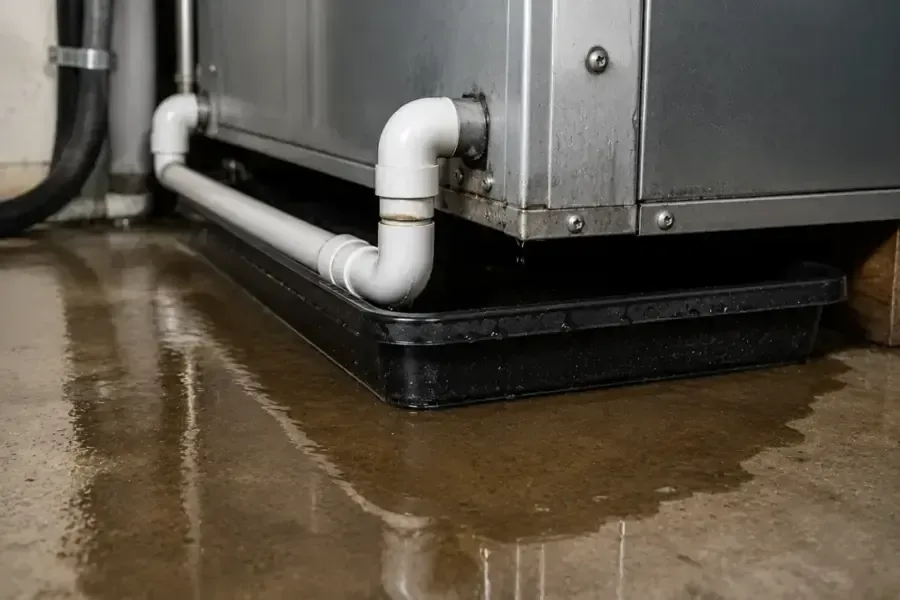
Summers in Chatsworth run long and hot, and in single-story slab homes with no basement the air handler often sits in the attic. When its condensate drain clogs, the water has nowhere to go but through the ceiling below. This post follows that water from the attic pan to the stain and explains how the ceiling is dried.
Key takeaways
- A running air conditioner makes water, and the condensate drain and pan carry it away; when they clog, the water spills into the attic.
- A brown ring, a bubble or a drip on a hall or bedroom ceiling during hot weather often traces back to the air handler.
- Switch off the AC at the thermostat and the breaker before anything else, then catch the drip and photograph the ceiling.
- Wet insulation above the ceiling holds water against the drywall, so the attic side matters as much as the room below.
- The ceiling is dried in place or opened depending on how long the water ran, and moisture readings confirm the result.
How attic AC water ends up in the ceiling
An air conditioner pulls moisture out of the air as it cools it. That water drips into a pan under the coil and flows out through a condensate drain.
Over a long hot summer the drain collects algae and sludge. When it clogs, the pan fills and spills, or a safety switch fails to shut the system off.
The pan and the drain
The drain pan sits under the coil, and a small pipe carries the water to the outside or to a plumbing drain.
Debris narrows that pipe slowly, so the first sign is often a pan that stays full long after the system stops.
The float switch
A float switch sits in the pan or the drain and cuts power to the system when the water rises. If it sticks or fails, the unit keeps making water into a full pan.
Signs of an attic AC leak
Attic leaks start quietly. The timing is the biggest clue: a roof leak follows rain, but an air conditioner leak follows hot weather and long run times.
Look at where the stain sits compared with the attic hatch and the air handler. Water tends to drop straight down or follow a joist a short way before it breaks through.
- A brown or yellow ring on a ceiling near a hall or closet where the air handler sits above.
- A drip or a hanging bubble that appears after the AC has been running for a while.
- A musty smell near a return vent or inside a closet.
- Water in the drain pan or a wet spot around the unit, when the attic is safe to reach.
- Ceiling paint that peels or a drywall seam that sags.
What to do when the ceiling drips
Water and electricity share the attic, so the first step is power. The rest follows from there.
None of these steps needs tools or time in a hot attic, and none of them replaces a visit from an air conditioning technician.
- Turn the AC off at the thermostat, then switch off its breaker.
- Place a bucket and towels under the drip, and move furniture and rugs out of the way.
- Stay out from under a ceiling bulge. A crew can release trapped water in a controlled way.
- Photograph the stain, the pan and the unit if the attic is safe to reach.
- Keep the AC off until the drain is cleared and the float switch is tested, since a running system keeps making water.
How the ceiling and the insulation are dried
The damage has two layers. Insulation and framing sit above the ceiling, and drywall and paint sit below it.
The scope depends on how long the water ran. A recent overflow often leaves a firm ceiling that can be dried in place, while a long one softens the board.
The drying team confirms the result with a moisture meter, so the ceiling is closed up only when the readings are back in the dry range.
Insulation above the ceiling
Wet insulation holds water against the back of the drywall. It is usually removed in the wet area and replaced once the framing is dry.
Drywall in the room below
Stained but firm drywall can often be dried through small inspection holes that let dry air into the cavity. Sagging, crumbling or heavily soaked board is cut out.
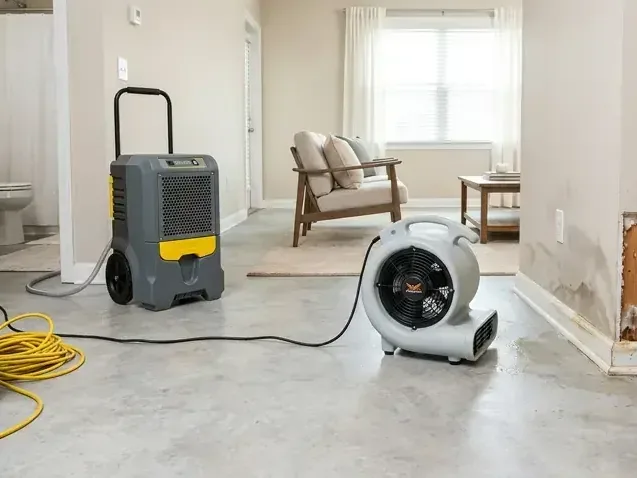
Air movers and a dehumidifier run in the room, and readings are taken each day until the ceiling and the tops of the walls are dry.
Why speed matters in summer heat
On a hot day the system runs for most of the afternoon, and each cycle adds more water to a pan that cannot drain. A ceiling can hold the load for a while, then give way all at once.
A fast AC condensate leak cleanup limits that spread, and the ceiling leak water damage work that follows restores the surface once it is dry.
- Wet insulation can sag and pull the ceiling down with it.
- Water can travel along framing and show up in a different room than the air handler.
- Electrical fixtures in a wet ceiling are a safety risk until they are checked.
Keeping it from happening again
An air conditioning technician can clear the drain and test the float switch before the hot months return. A secondary pan with its own switch adds a second layer of protection.
The AC overflow risk check scores an attic or closet air handler for drain, pan and float switch risk. It is a quick way to see whether a unit deserves attention before the next heat wave.
What changes the size of the job
Two attic leaks that look alike from the room can carry very different repair scopes. A few factors decide which one a home has.
Typical drying days by material are listed in the drying time estimator, which helps set expectations for a wet ceiling.
- How long the water ran before the AC was switched off.
- Whether the insulation above the ceiling is wet, and how much of it.
- How many rooms the water reached along the framing.
- Whether the drywall stayed firm or went soft.
- Whether light fixtures or wiring sit in the wet area.
Questions
Why does an AC leak through the ceiling more in summer?
A cooling system runs for long stretches in hot weather and makes more water, so a partly clogged drain that coped in cooler months starts to spill.
Is the water from an AC pan clean?
It starts as condensation, but it picks up dust and slime from the coil and the pan. Wet materials are checked rather than assumed clean, and water that sits for days is treated with more care.
Can a stained ceiling be dried, or does it have to be replaced?
A firm ceiling with a recent stain can often be dried in place. A ceiling that sags, crumbles or stays soft is cut out and replaced after the framing dries.
Should the AC keep running during the cleanup?
No. Keep it off until the drain is cleared and the float switch is tested, because a running system keeps making water.
Do homes in Chatsworth often have the AC in the attic?
Many single-story slab homes do, since there is no basement or crawl space to hold the equipment. That puts any overflow directly above the ceiling.